


Knowledge
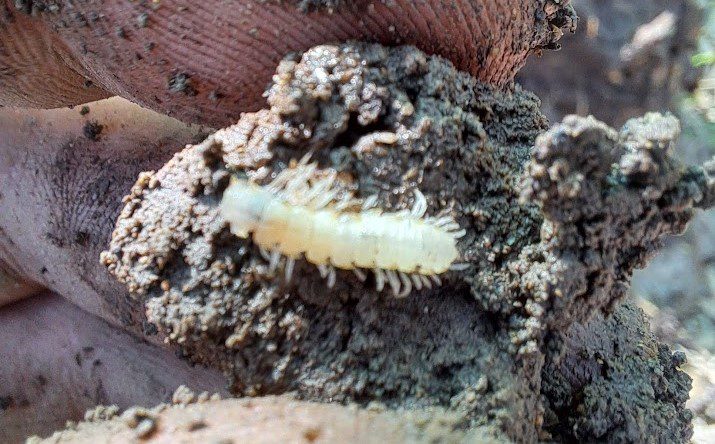
Field Notes: The Hungry, Hungry Caterpillar
Dec
Greed, growth, and what the garden teaches us.
In every grower’s life there comes a day when the garden humbles you.
It might be the first time a storm wipes out a week’s progress, or when the buds you raised like children turn to dust from mold overnight. It might be the moment you spot the faint bite marks of a caterpillar — the small, undeniable proof that something else also loves what you’ve built.
That’s the real education in cannabis cultivation. Not in nutrients or light cycles, but in acceptance. You learn quickly that control is an illusion, and the best cannabis growers — whether in Thailand, Portugal, or California — are the ones who surrender just enough of it.
At Ritual Genetics, we talk often about ritual. Not in the mystical sense of candles and smoke, but in the way a disciplined practice becomes spiritual through repetition. A ritual is a habit performed with attention. It’s the same act — watering, pruning, cleaning — done over and over until it stops being mechanical and starts to mean something.
When you feed the soil, you’re not just giving nutrients. You’re building life. Living soil is our foundation — a self-sustaining ecosystem of microbes, fungi, and organic matter that keeps roots healthy and plants resilient. When you prune, you’re shaping growth while accepting that creation always requires loss. And when you kneel in the grow room, checking trichomes under the light, you’re not simply measuring ripeness — you’re listening.
Understanding Greed in the Garden
Greed, in cultivation, takes many forms. It’s the urge to push harder, to squeeze one more gram from a plant that has already given enough. It’s the shortcut nutrient mix, the overfeeding, the impatience that ruins what patience would have perfected.
The caterpillar is a mirror for that impulse. It devours everything within reach, not from hunger but from instinct. Growers in Thailand know this story well — in the tropics, greed moves fast. The garden always answers excess with balance: leaves burn, roots drown, flowers fade. Nature reminds us — gently at first, then not so gently — that appetite must be tempered by respect.
At Ritual Genetics, we’ve learned to see these corrections not as failure but as feedback. The garden doesn’t punish; it converses. Every wilted leaf, every bite mark, every imbalance is information waiting to be heard.
Organic Pest Management as Dialogue
For those practicing sustainable cannabis farming in humid climates, caterpillars are not hypothetical villains; they’re recurring visitors. They come with the heat, the humidity, and the abundance. You can wage war on them, but war against nature is always temporary.
The real art lies in organic pest management — protecting your plants without poisoning your soil. We rely on neem oil, beneficial insects, and biological deterrents like Bacillus thuringiensis. Companion plants help confuse pest signals. Strong soil communities make the plants resilient from within. It’s a slower, subtler kind of defense — one rooted in understanding instead of annihilation.
When we say “greed is a hungry, hungry caterpillar,” we mean that every imbalance begins with wanting too much. The practical mystic’s answer is patience. Instead of reacting with rage, observe the pattern. The problem that appears as a pest is often a symptom: airflow too still, humidity too high, nutrition uneven. Solve the environment, and the pest loses its edge.
The Discipline of Living Soil
Organic cultivation begins beneath the surface. Growers who build living soil aren’t just feeding plants; they’re cultivating ecosystems. Healthy microbial life converts organic matter into balanced nutrition, improving structure, moisture, and natural defense.
Working with living soil is slow, but it creates self-sufficiency. You reduce bottled inputs, minimize runoff, and cultivate a sustainable rhythm. For sustainable cannabis cultivation, there is no faster path to quality — the terpene depth, color, and structure tell the story of microbial harmony.
This is sustainable farming in its purest form — not a marketing term, but a practice of continuity. What you give to the soil returns in health, aroma, and resilience. The mysticism isn’t in incense; it’s in microbes.
Tropical Cannabis Genetics: Collaboration, Not Control
In the tropics, the line between thriving and chaos is thin. Humidity can be mercy or menace. A single unmonitored week can undo months of work. Yet that same intensity is also the secret of abundance.
That’s why we specialize in tropical cannabis genetics — plants designed not to resist nature but to work with it. Ritual Genetics strains are bred for high humidity, pest tolerance, and expressive terpenes that thrive in equatorial light cycles. We don’t fight the environment; we collaborate with it.
Each genetic line carries the memory of its environment — sun, soil, and challenge encoded in its structure. This is why Ritual Genetics calls its work both scientific and spiritual. The plant evolves with the grower, and the grower evolves with the plant.
Meditation Through Cultivation
A good grow is less like industry and more like conversation. The soil speaks; you answer. The plant grows; you adjust. Over time, that rhythm becomes meditation. You stop chasing perfection and start cultivating relationship.
Our process follows three guiding principles: patience, vigilance, and balance. Patience, because nothing truly good can be rushed. Vigilance, because living systems respond to attention. Balance, because excess — whether of nutrients, pride, or ambition — always invites collapse.
Every harvest carries a reminder that success isn’t defined by yield alone, but by connection — between grower, plant, and environment.
The Spiritual Economy of the Garden
If greed consumes, gratitude restores. The garden teaches both. To grow consciously is to accept loss as part of the process: leaves fall, pests nibble, storms come. You learn to measure abundance differently — not in grams, but in harmony.
Each cycle of cultivation refines more than your genetics; it refines your mindset. You begin to see patterns between soil health and patience, between weather and discipline. The plant reflects the person. The caterpillar tests the person.
That’s why we call what we do Ritual. Because repetition with intent transforms labor into language. The act of watering becomes prayer. The act of pruning becomes humility. The act of rebuilding after loss becomes resilience.
Conclusion: Respect as Practice
Sustainable cannabis cultivation isn’t a trend — it’s the future of responsible growing. Organic cultivation, living soil, and tropical cannabis genetics are not separate ideas but interconnected systems. Together they form the foundation of what we believe: a respectful, regenerative relationship between humans and plants.
At Ritual Genetics, we don’t just produce seeds. We breed resilience — in the plant, in the ecosystem, and in the grower. Every cycle teaches balance. Every setback refines awareness. Every harvest deepens gratitude.
When we say bred for the tropics, we’re also describing ourselves. We adapt. We learn. We endure. We grow in heat, in pressure, in constant change.
Because every good garden is a ritual — and every ritual begins with respect.