


Knowledge
Thai Landrace Genetics for Breeders: Clean Sativa Lines Explained
Aug
Thai Landrace Genetics for Breeders: Clean Sativa Lines Explained
Most of what’s sold as “sativa” today is several generations removed from anything that ever grew wild. Every round of hybridizing and stabilizing adds vigor and predictability, but it also blurs the genetic signature that made the original plant distinct. Landrace genetics are the exception. A landrace has spent generations adapting to one place, breeding within a closed, natural population. That means its genetic signature is still legible, and still useful to work with.
That’s really why Thai landrace genetics matter for a breeding program. It’s not about nostalgia for “the old stuff.” It’s about access to traits that are genuinely harder to find anywhere else: resilience built by the environment itself, terpene and effect profiles that haven’t been smoothed out by generations of hybridization, and a level of genetic consistency that makes a landrace a more reliable starting point than most modern hybrids.
Why Thai Landrace Genetics for Breeders Matter
A stabilized hybrid is bred for uniformity. Every seed is designed to grow into roughly the same plant. A landrace wasn’t bred for anything except survival in a specific place, so it carries more raw variation. But it also carries more honest information about what actually works in that environment. For a breeder, that raw material is valuable in a few concrete ways:
- Resilience traits that are hard to source elsewhere. Heat tolerance, humidity tolerance, and natural pest resistance aren’t things you can easily breed in from scratch. They come from a population that had no choice but to develop them.
- Distinct terpene and cannabinoid expression. Landraces haven’t been selected toward the same handful of commercially popular flavor profiles, so they’re a source of genuinely different chemistry to introduce into new crosses.
- A cleaner starting point for stabilization work. Because a landrace has bred within a closed population for generations, it can be more predictable to backcross or stabilize than a genetically “noisy” modern hybrid.
Why Thailand Specifically
Thailand’s growing regions are geographically fractured. There are mountain ranges, river valleys, islands, and coastline, often cut off from each other by terrain rather than distance. That isolation is what produced genetically distinct regional lines in the first place. A population on an island jungle and a population in a coastal lowland faced different pressures (different humidity, different pest load, different soil) and adapted differently, without much gene flow between them. The result is a small but genuinely diverse gene pool, most of which never made it into commercial hybrid breeding.
The three lines below are what’s currently available from our Seeds of Siam collection, each pulled from a distinct region and each useful to a breeding program for different reasons.
KD Koh Tao: Pure Island Genetics
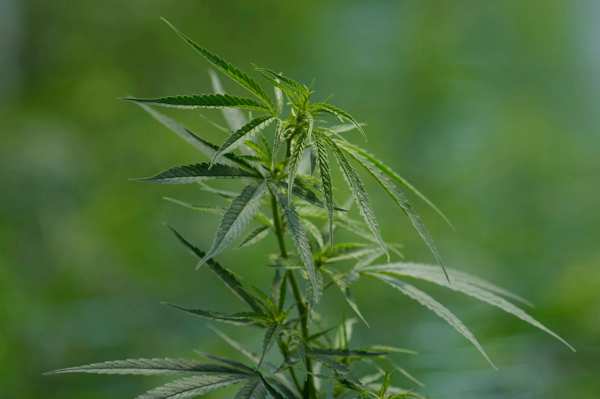
Preserved from the island jungles of Koh Tao, KD Koh Tao is about as close to unworked tropical sativa as you’ll find in seed form. It’s a vigorous, narrow-leaf plant with long internodes (classic tropical landrace architecture) and a bright, electric high carrying notes of mango skin, menthol, pine, and fermented fruit.
Breeder benefit: this is a genuinely clean island-isolated line, useful as a base for anyone who wants to introduce true tropical sativa vigor and psychoactive clarity into a new cross without the noise of prior hybridization. It’s a long-season plant (13 to 16 weeks flowering, 3m+ outdoors), so it rewards patience rather than speed.
Rudder (Haang Suea): Speed and Resilience
Sourced from coastal growers on the eastern seaboard, Rudder is the fastest-finishing of the three at 12 to 15 weeks, with a tall, agile branching structure that’s clearly adapted to heat, rain, and sea breeze. Its effect is more grounded and introspective than the brighter highland sativas. It’s smooth and long-lasting rather than “electric.” The terpene profile is unusual for the category too: dry sandalwood, kaffir lime, black pepper, and forest floor.
Breeder benefit: Rudder is the practical resilience donor of the three. If you’re working on a tropical hybrid project and need to shorten flowering time or build in heat-and-humidity tolerance without losing landrace character, this is the line to start from.
Tanao Sri Red: Distinct Chemistry and Pigmentation
Pulled from the Tanao Sri mountain range, which divides Thailand’s Central Plains from the Tenasserim Hills, Tanao Sri Red is technically a lowland/highland hybrid landrace, and it shows: it’s taller and more intense than its sister line, Tanao Sri White. Expect deep red pistils, dark red or purple striations on the stems and petioles, spice-heavy terpenes, and a strong, visionary effect. It’s also the slowest to finish, at 14 to 17 weeks.
Breeder benefit: this is the line to reach for if you’re chasing distinct pigmentation or a genuinely different terpene signature. Those traits are difficult to find in commercial hybrid stock. Because it’s already an internal hybrid between two regional lines, it also carries some built-in hybrid vigor, which can make it more forgiving to work with than a pure single-population landrace.
Working With Landrace Genetics: What to Expect
Thai landrace genetics for breeders take a bit more hands-on work than a standard hybrid pack, since landraces are not plug-and-play. Expect more phenotype variation across a pack of seeds than you’d get from a stabilized hybrid. That variation is the point, but it also means more selection work on your end. A few practical notes for anyone working with these lines:
- Grow out more seeds than you think you need. Phenotype hunting is how you find the individual plant worth working from.
- S1s and backcrossing are your friends. Stabilizing a landrace trait usually takes a few generations of selfing or backcrossing to a chosen phenotype.
- Budget for a longer flowering window. All three of these lines run long by modern hybrid standards. That’s the tradeoff for genuine landrace character.
If you’re new to Thai landrace genetics generally and want the fuller history and cultural context behind these lines, check out our earlier piece, Thai Landrace Cannabis: Roots of Tropical Genetics, which covers where they come from. This piece is meant to sit alongside it as the practical, breeding-focused companion.
You can browse all three lines together in the Seeds of Siam collection.